
See how others are doing it · GP School
A visitor for Brian.His mother knew within a minute.
Esther is deputy principal at Riverbend Academy, a day school of 1,200 students. This is how the gate learned to tell teachers and parents who came, for whom, and when.
A school with many front doors
Riverbend’s gate opens before the first bell. Parents come about fees and reports, suppliers bring the kitchen’s deliveries, officials arrive for inspections, and relatives come to see students.
The teachers they come for are rarely in one place. They teach in classrooms, labs and on the games field, so a visitor at the office used to mean a runner crossing the compound to find them.
Esther’s questions were about the children first.
A visitor for Form 2B
Samuel Otieno arrives at the gate mid-morning. He is Brian’s uncle, and he has come to see Brian’s class teacher about a school trip.
The guard picks the teacher from the list, then asks for the student’s admission number. Samuel reads it off the school letter in his hand.
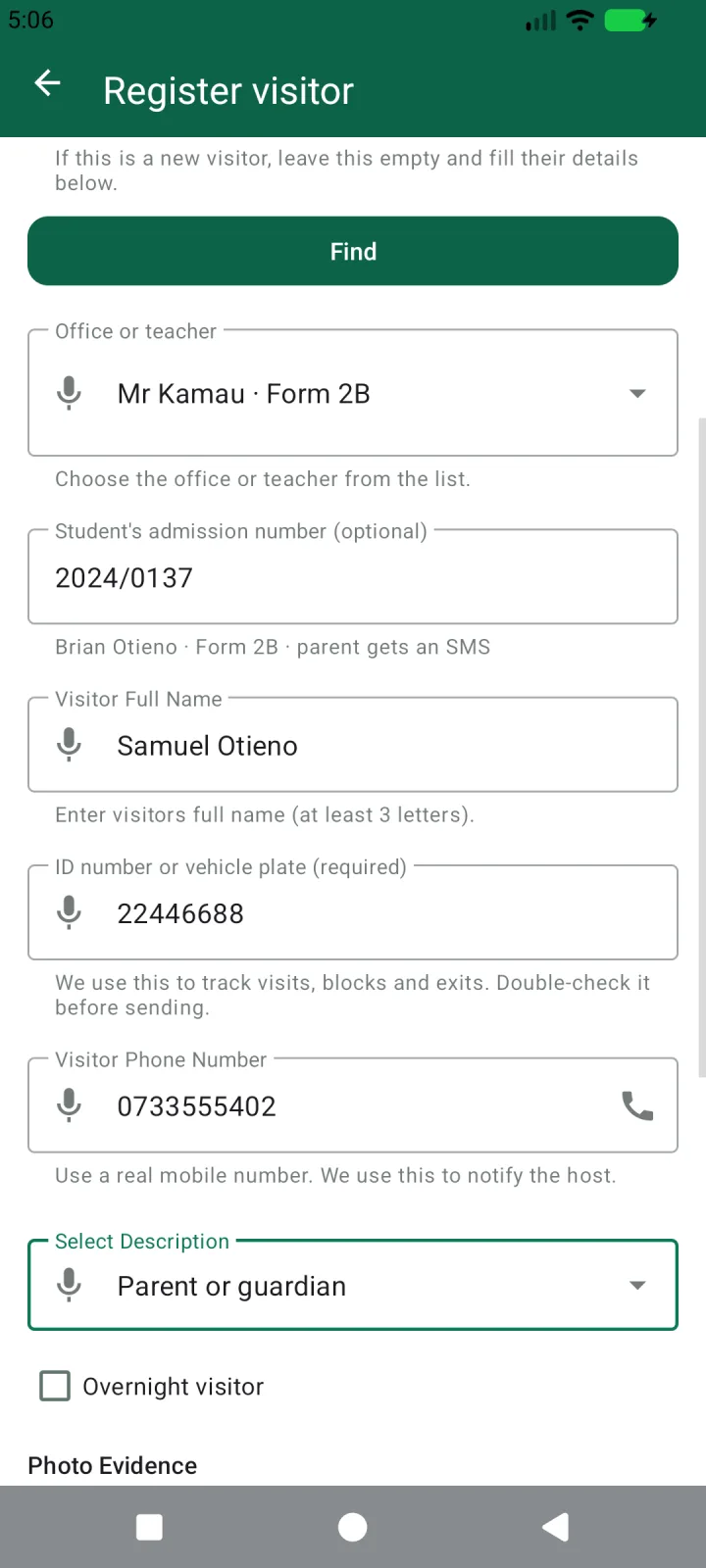
Mr Kamau · Form 2B, and admission number 2024/0137. The gate phone finds Brian Otieno in Form 2B and says his mother gets an SMS.
Two phones, two places, one minute
Mr Kamau is halfway through a lesson in Lab 2 when his phone buzzes. The message names the visitor, the student and the reason, so he replies YES and carries on. Samuel waits at the staffroom for the lesson to end.
Across town, Brian’s mother Grace reads her own message: who came, to see which child, with which teacher, and at what time. She asked Samuel to go, and now she knows he is there.
Every office and teacher on the list
Admissions, the bursar, the deputy principal and each class teacher: visitors are sent somewhere specific.
The class lists, once
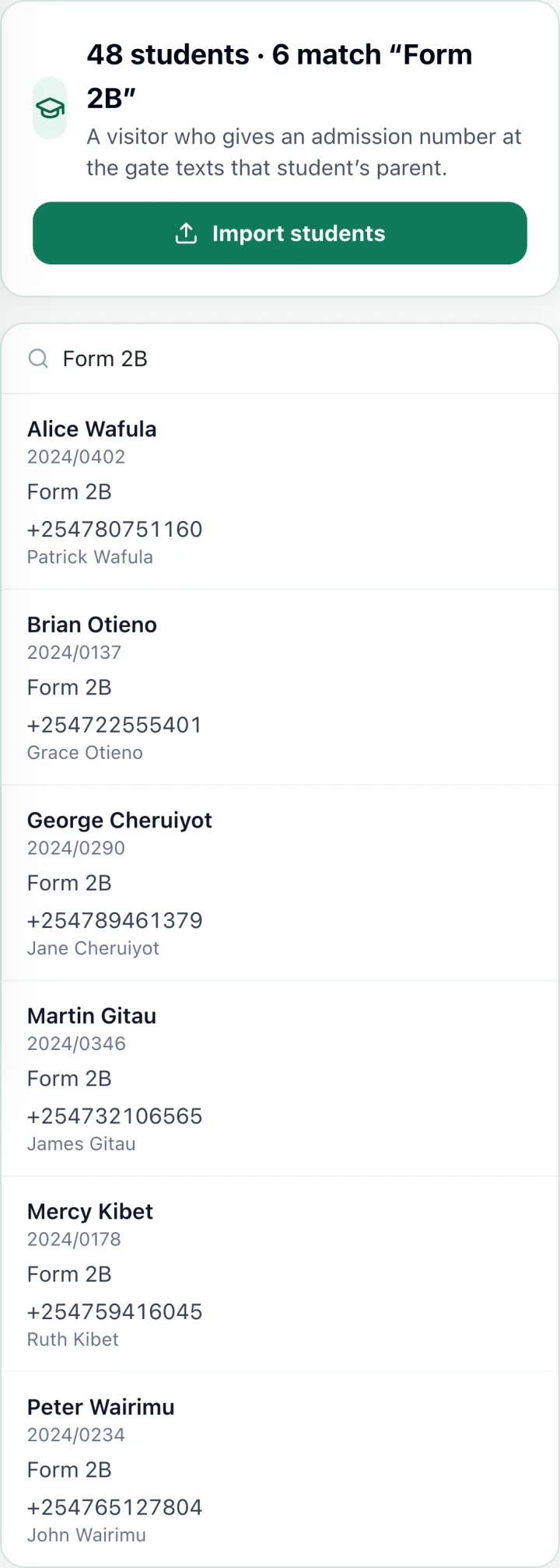
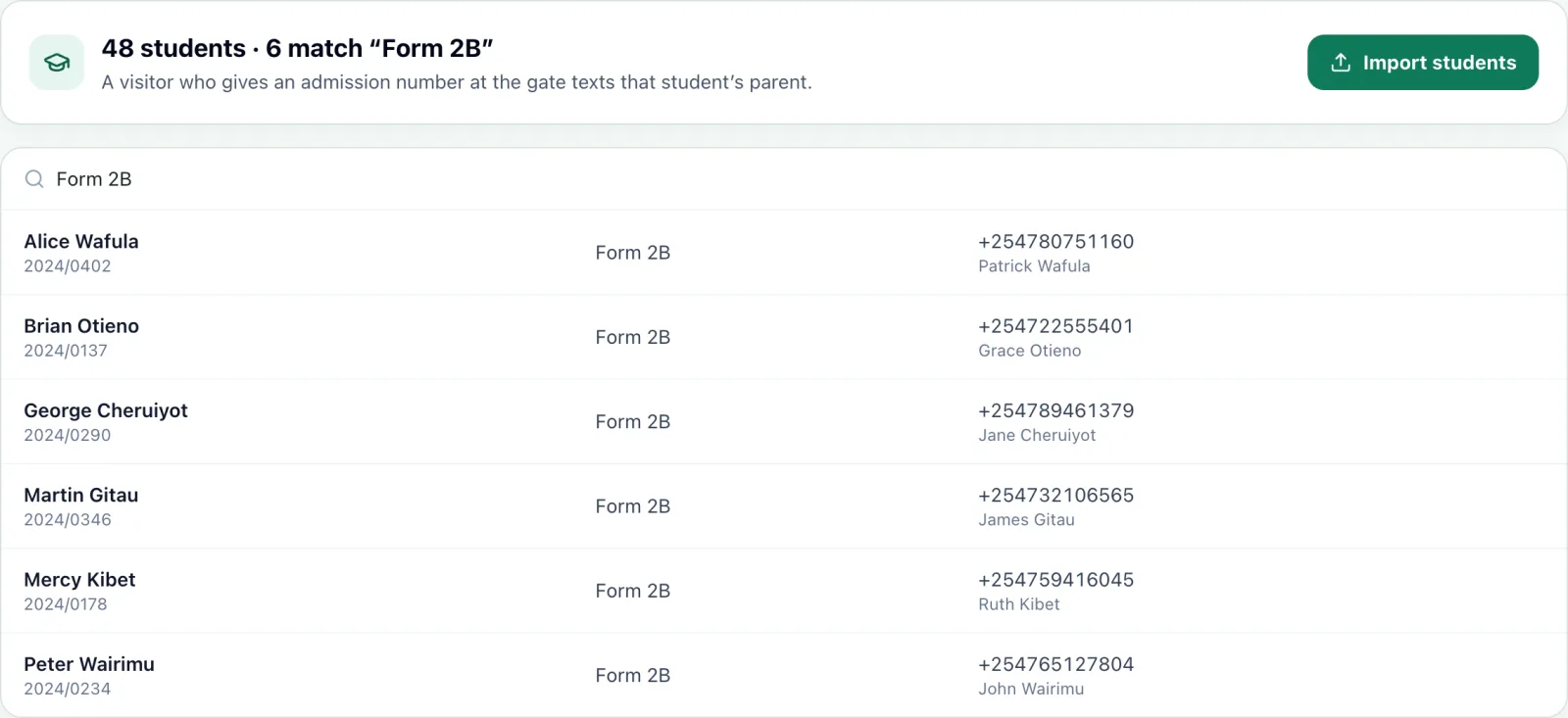
Esther imported the students with their parents’ numbers from the school’s spreadsheet in an afternoon.
The teacher and the parent
A visit for a student texts both: the teacher to receive the visitor, the parent to know who came.
The office sees the whole school
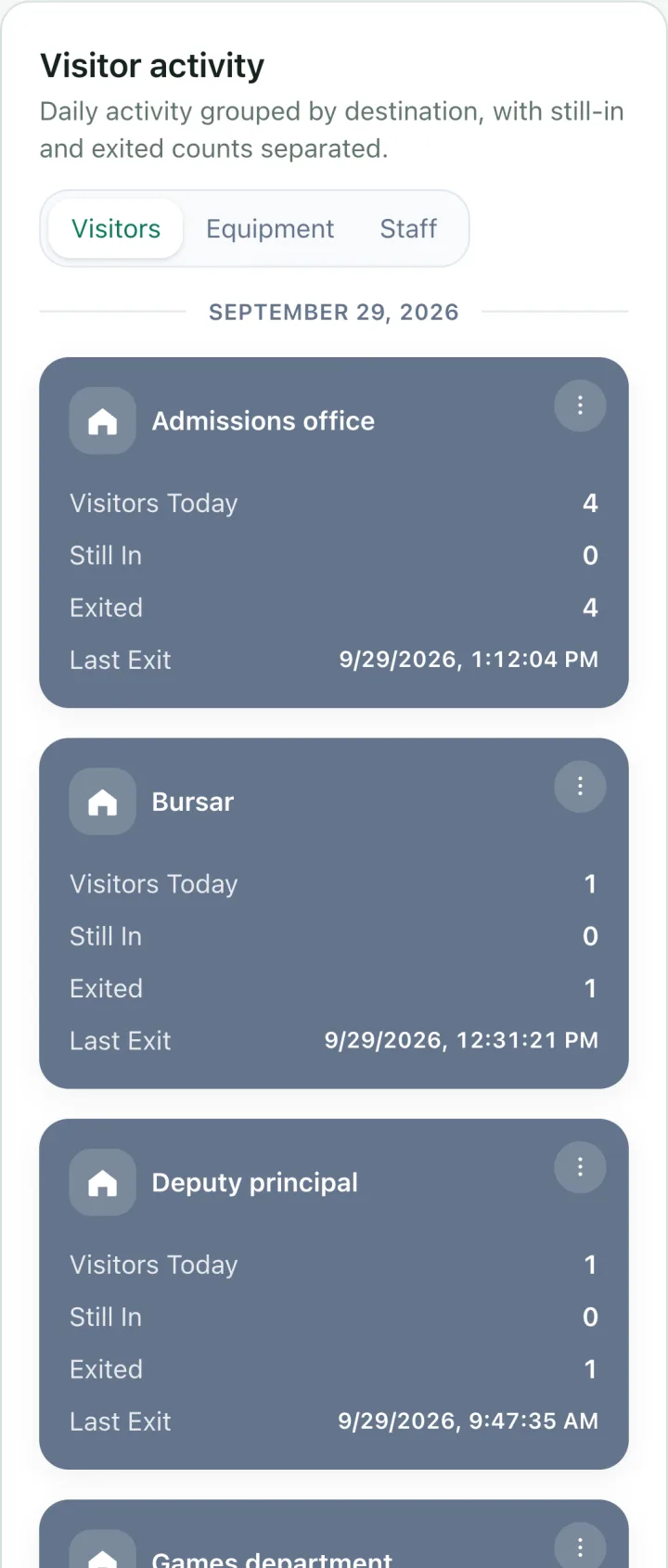
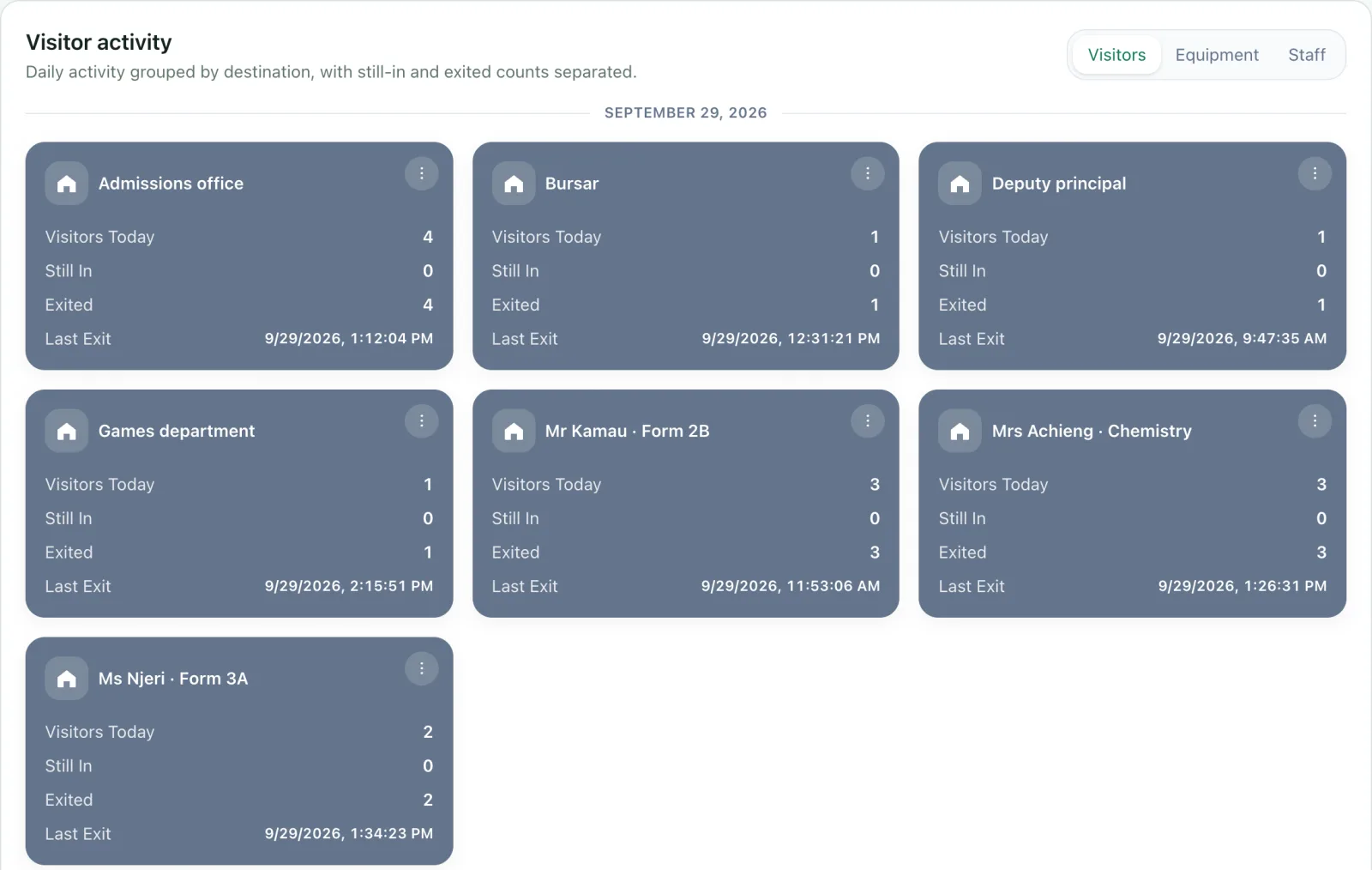
After lunch Esther opens the dashboard. Each office and teacher is a card: visitors today, still in, gone, and the last to leave.
The bursar has seen one parent, the admissions office four. Mr Kamau’s visitors have all signed out. A glance tells Esther where the school’s visitors are, and saves her a walk around the compound.
Before the buses leave
By half past four, the school belongs to its students again. Every visitor who came in signs out at the gate, by ID number or exit code.
The gate phone keeps the count of who is still inside. When it reaches zero, the guard can wave the buses out knowing the compound holds only Riverbend’s own.
Signed out at the gate, one by one.
Who came to see Brian?
Some questions arrive weeks later, from a parent or from the board: who has been to see this student this term?
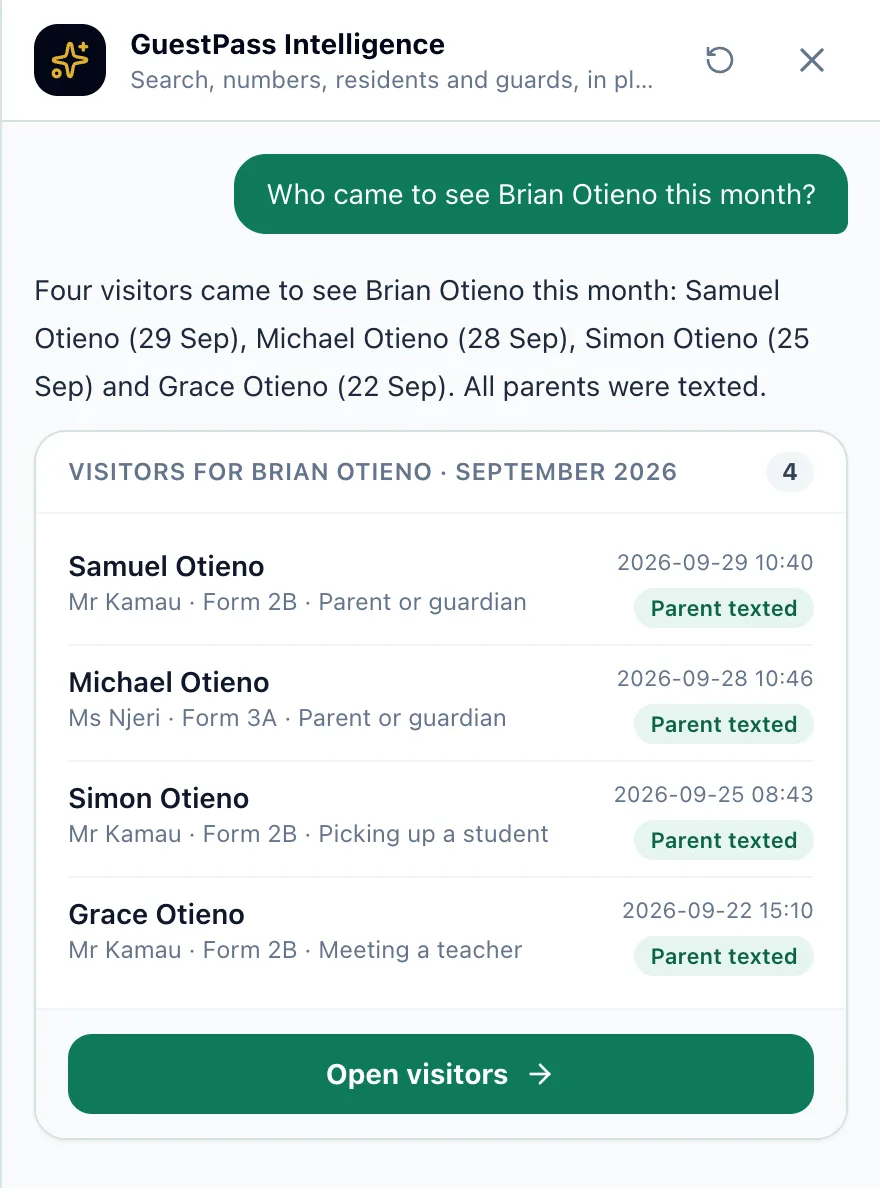
Esther asks GuestPass in plain words. The answer lists every visitor for Brian, the teacher they met, the reason, the time, and that his mother was texted each time. A button opens the full record.
A record that answers parents
Every visit carries the student it was for, the teacher, the reason, the times in and out, and the message the parent received. When a parent asks, Esther has the answer before the call ends.
What changed at the gate
Parents know who came to see their children, and teachers hear about visitors wherever they teach.
Teachers stay in class
The visitor’s SMS reaches the teacher in the lab or on the field, and a YES brings the visitor over.
Parents stay informed
Each visit for a student texts the parent: who, with whom, when and why.
The compound closes clean
The count reaches zero before the buses leave, and the record keeps every visit.